

6 Volumes
Athena Textbook of Longevity Medicine
A rigorous, system-by-system scientific reference for clinicians.
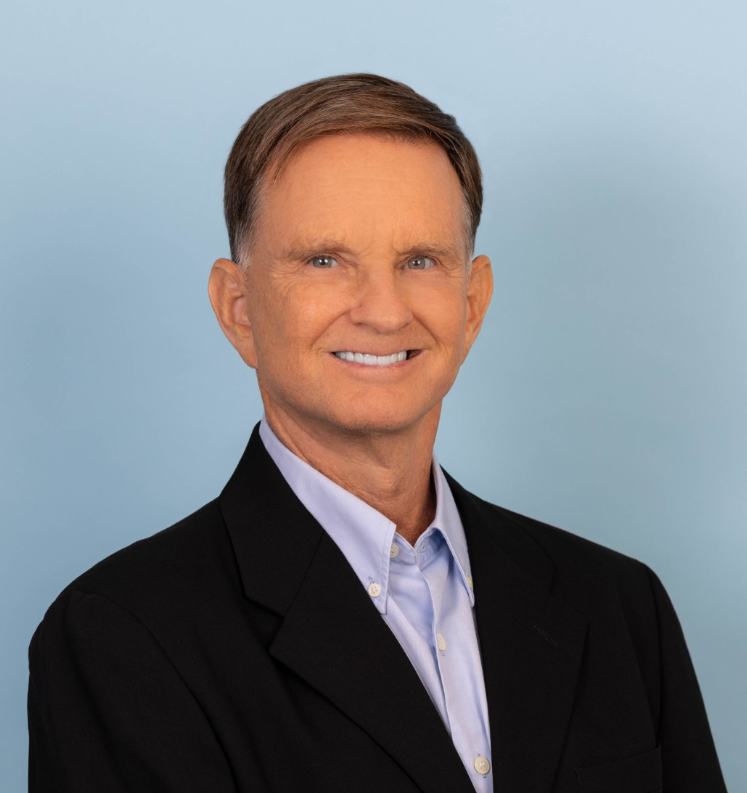
About Dr. Peterson
Dr. Robert Peterson has spent his career helping patients combat aging — first as a plastic surgeon and now as a longevity expert. With a background in engineering and pharmacology, he is now focused on how we age, what can be done about it, and what gives the most "bang for the buck."
You are only as young as your oldest parts.
— Dr. Robert Peterson

My Story & Philosophy
Why do different parts of the body age differently? Same genes, same environment, but very different outcomes — and it was a question the "anti-aging" world wasn't asking. That puzzled me more than it should have. An old mind in a young body is not the goal, and neither is a young mind in an old body.
For more than 30 years I've tried to make sense of "anti-aging medicine" — watching fads come and go: telomeres, hormone replacement, supplements, rapamycin, resveratrol, stem cells, and the rest. Each one excited me with its possibilities, then disappointed me when it didn't live up to its promise.
So I decided to slow down and really examine the basic science of aging — system by system, and what can currently be done about each one. Extensive research turned up a wealth of information, and 2,000 pages of textbook. What became clear along the way is that every organ ages differently, and that the weakest link matters most: you are only as young as your oldest part. A young brain in an old body — think of Stephen Hawking — is no one's idea of a solution, and neither is a failing mind in a fit, healthy body.
Out of that came the tools I now build my practice around. The first is the Athena Textbook of Longevity, an in-depth, rigorous look at aging for each of the body's systems — a framework for evaluating new treatments and predicting their expected benefit (or lack thereof). The textbook is meant for professionals; I've made the material more accessible through the Rebellious Aging Podcasts and Rebellious Aging Guidebooks, and am now working to make it even more accessible through an AI interface.
Measuring the current status of a system places you on a curve and allows an estimate of time to failure using population-based norms. Two or more measurements fine-tune that curve to your own specifics — your current reserves and your slope — sharpening the prediction. Bearing in mind that you're only as young as your oldest system, I aim efforts at forestalling failure of the weakest link, rather than diffusely addressing all 32 systems, or worse, improving only the ones that are already fine.
The second tool is the Japanese Ningen Dock concept of regular tune-ups — similar to the 5,000-mile service of a car — designed to catch and correct problems while they're still easy to fix. This pairs naturally with the Overflowing Buckets Model, which gives highest priority to the lowest-cost, highest-benefit treatments, and matches higher-cost, experimental options to each patient's financial and health goals.
Aging involves the steady, predictable decline of many systems at various rates, but not everything declines so politely. Some things arrive all at once — a heart attack, a stroke, cancer, an accident. The timing can't be predicted, but the likelihood can. You can make your own luck: if you're a heart attack waiting to happen, it shouldn't come as a surprise when it actually does. I call these sudden events Black Swans, and they're the subject of the book by that name.
As much as I was puzzled by the chaos surrounding the science of aging, I was even more perplexed by the marketplace — dominated by sales to hopeful, unsophisticated consumers. After careful analysis, I noticed a contradiction: the least expensive treatments have the most proof, while the most expensive are often based on nothing more than laboratory findings or scant mammalian evidence. Why do people skip the low-hanging fruit in pursuit of the exotic? Partly because the effective treatments are hard, or boring, or simply not fun. I address these objections — including my own — in the Bargaining with Aging series.
Trying to change that led me to one more conclusion: it takes a village. Social support helps with adherence to a program that's hard and unglamorous, and social connection is itself one of the pillars of successful aging, alongside movement, diet, and sleep. That's what led me to start the Rebellious Aging Ohana.
Social Connection
Social connection is itself one of the pillars of successful aging, alongside movement, diet, and sleep.
Social support helps with adherence to a program that is hard and unglamorous.

The Frameworks
Every organ ages differently, and the oldest system sets the clock. Effort goes to forestalling failure of the weakest link, not improving the systems that are already fine.
The Japanese concept of regular tune-ups, like the 5,000-mile service of a car, designed to catch and correct problems while they are still easy to fix.
Highest priority goes to the lowest-cost, highest-benefit treatments. Higher-cost, experimental options are matched to each patient's financial and health goals.
Not everything declines politely. Heart attacks, strokes, cancer and accidents arrive all at once. The timing can't be predicted, but the likelihood can. You can make your own luck.
Medical Credentials
See timeline below.
Plastic Surgery Residency
Baylor College of Medicine, Texas Medical Center
General Surgery
University of Hawaii Integrated Surgery Residency Program
Fellowship, Microsurgical Hand Surgery
9th People's Hospital, Shanghai
Fellowship, Pediatric Reconstructive Surgery
Showa University, Tokyo
Fellowship, Microsurgery & Rehabilitation Surgery
Baylor College of Medicine
Publications
6 Volumes
A rigorous, system-by-system scientific reference for clinicians.
28 Books
Accessible, patient-facing guides drawn from the textbook material.
4 Books
Honest reckonings with the trade-offs and unknowns of growing older.